
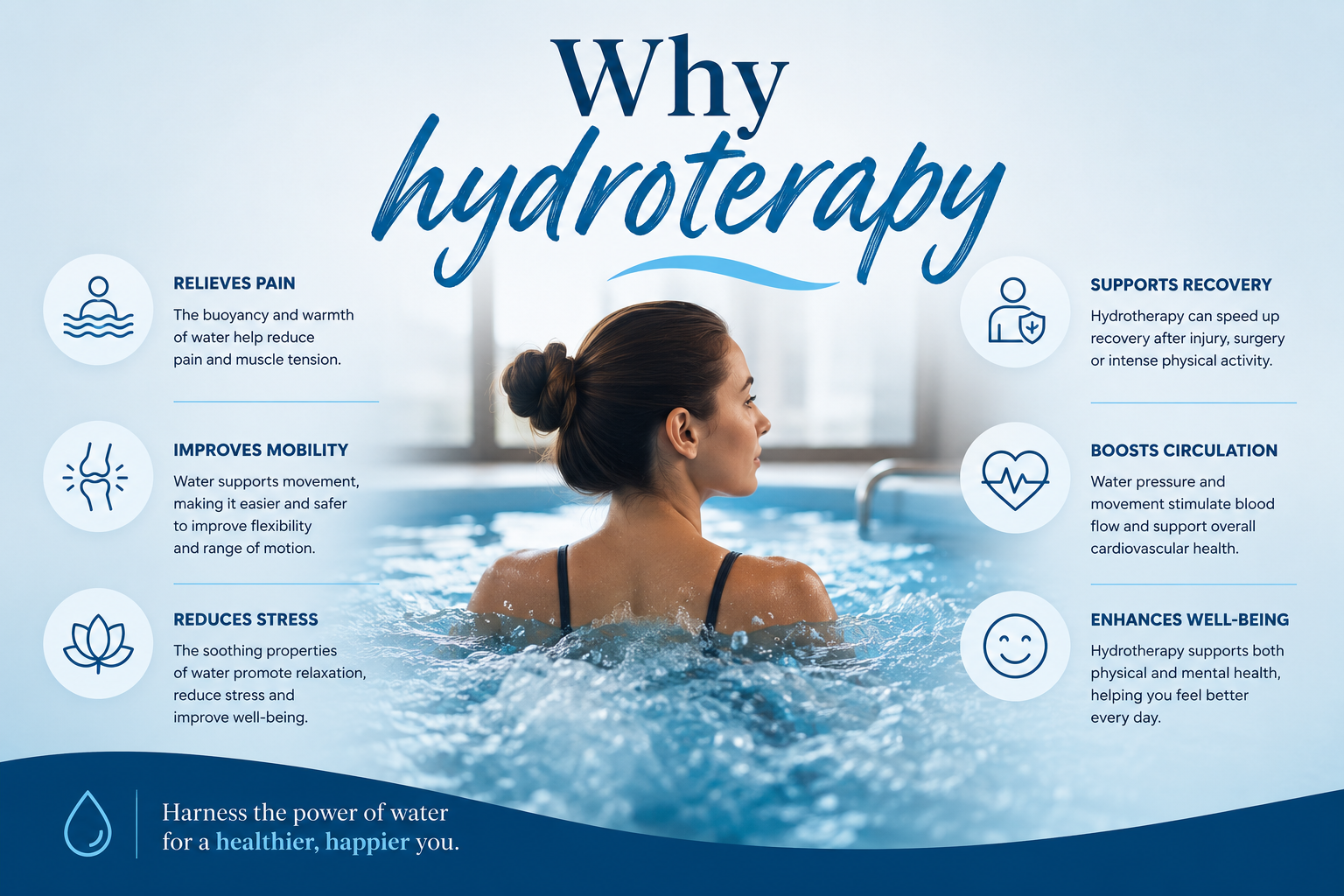
As we age, aches, stiffness, and reduced mobility can sometimes make traditional exercise feel challenging. That's where hydrotherapy comes in. Also known as aquatic or water therapy, hydrotherapy uses the unique properties of water, such as buoyancy, resistance, temperature, and pressure, to support movement, reduce discomfort, and promote overall wellness. What makes it particularly appealing for older adults is that it provides many of the benefits of exercise while placing far less stress on joints and muscles.
One of the biggest advantages of hydrotherapy is pain relief. Warm water can help relax tight muscles, ease joint stiffness, and reduce everyday aches associated with conditions such as arthritis and fibromyalgia. At the same time, the buoyancy of water supports body weight, allowing people to move more freely and comfortably than they might on land. This often makes exercise feel less intimidating and more enjoyable.
Hydrotherapy can also help improve balance, strength, and mobility, three key factors for maintaining independence later in life. Water provides natural resistance, helping to strengthen muscles, while its supportive environment allows people to practice movement with a lower risk of falls. For those recovering from surgery, stroke, or injury, aquatic therapy can be a valuable part of rehabilitation and recovery.
The benefits extend beyond the physical. Many older adults find that time spent in the water helps reduce stress, improve mood, and promote relaxation. Whether it's a structured aquatic exercise class, a therapy pool session, or simply soaking in a warm tub, hydrotherapy can provide both physical and mental relief. In a world where healthy aging is about staying active, independent, and engaged, water may offer one of the gentlest and most enjoyable paths to better health.