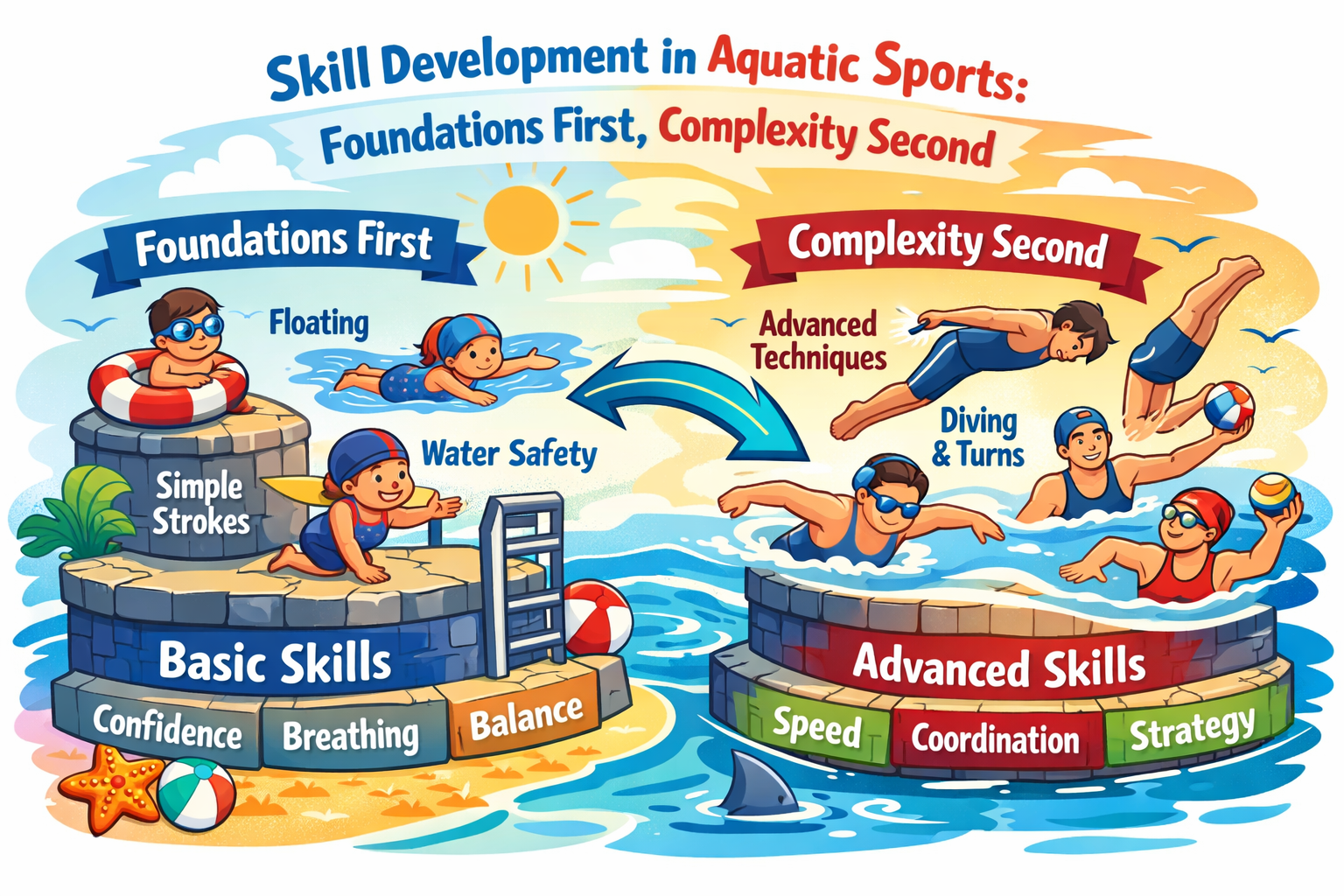
In aquatic sports, skill development follows a simple but essential principle: build strong foundations before adding complexity. Whether in swimming, water polo, diving, artistic swimming, or open water racing, athletes must first develop comfort, safety, and control in the water before they can master advanced techniques.
The very first step is confidence in the aquatic environment. Athletes need to feel safe and relaxed in the water, learning basic skills such as breathing control, floating, and smooth movement. Without this foundation, learning more advanced skills becomes difficult and often frustrating.
Once athletes are comfortable in the water, the next stage is layering additional skills. Coaches gradually introduce elements such as body position, timing, kicking efficiency, and the ability to “hold water.” These skills help athletes gain better control of their movements and prepare them for the technical demands of their specific discipline.
Each aquatic sport eventually leads to different performance goals. Swimmers may aim to complete a technically strong 200 individual medley. Artistic swimmers focus on precise figures and control during routines. Divers work toward consistent takeoffs and safe entries before progressing to more complex dives. Water polo players first learn efficient movement in the water before developing passing, shooting, and tactical skills. Open water swimmers build endurance and navigation abilities, while Masters athletes often focus on maintaining technique, fitness, and long-term health.
Despite these differences, the development process remains the same: start simple, then build gradually. Coaches should clearly define where athletes are starting, where they want them to go, and what resources, such as coaching time or pool access, are available to support the journey.
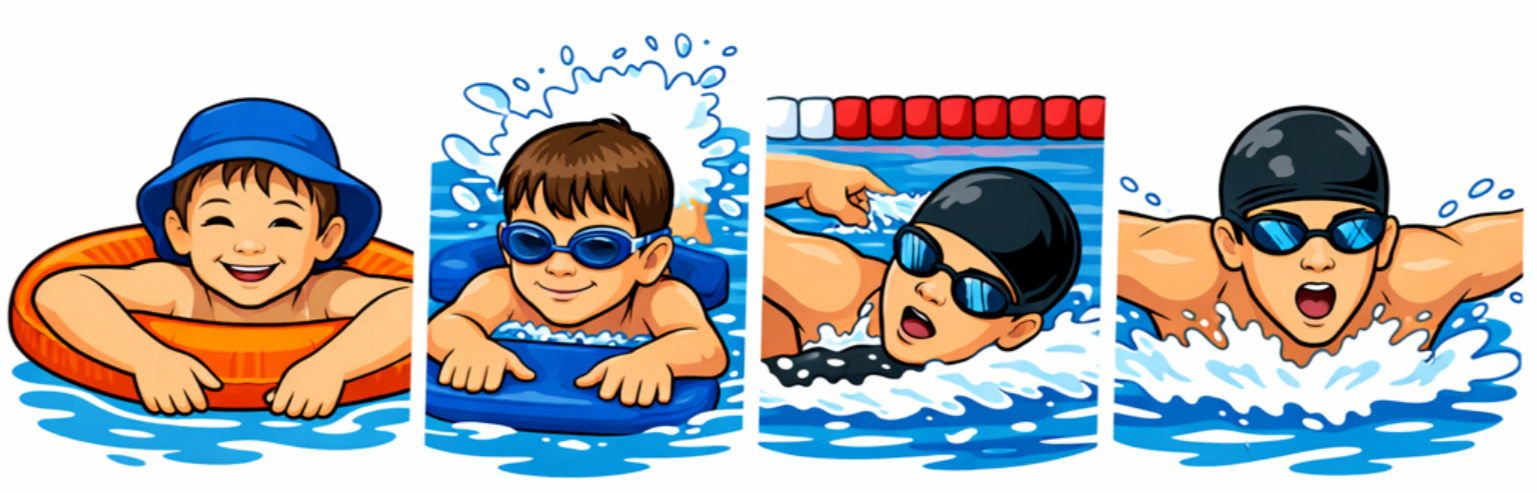
A practical way to guide development is to begin with the final outcome in mind. For example, a group’s goal might be to swim a 200 individual medley with legal turns and consistent pacing. Coaches can then assess current abilities and introduce progressive drills that move from basic practice to more challenging and competition like situations.
It is also important to measure progress with simple indicators, such as time, accuracy, endurance, or consistency. Tracking small improvements helps athletes stay motivated and see the results of their work.
When skill development is approached step by step, athletes build confidence and mastery at a natural pace. Strong foundations not only improve performance but also make the learning process more enjoyable, helping athletes develop a lasting connection with the water.