Why Swimming Lessons Are More Than Just Safety for Young Children
Many people think swimming lessons are mainly about safety. While learning to swim is indeed essential, the benefits go far beyond preventing accidents. Early swimming experiences can play a powerful role in a child’s brain development, emotional growth, and overall learning.
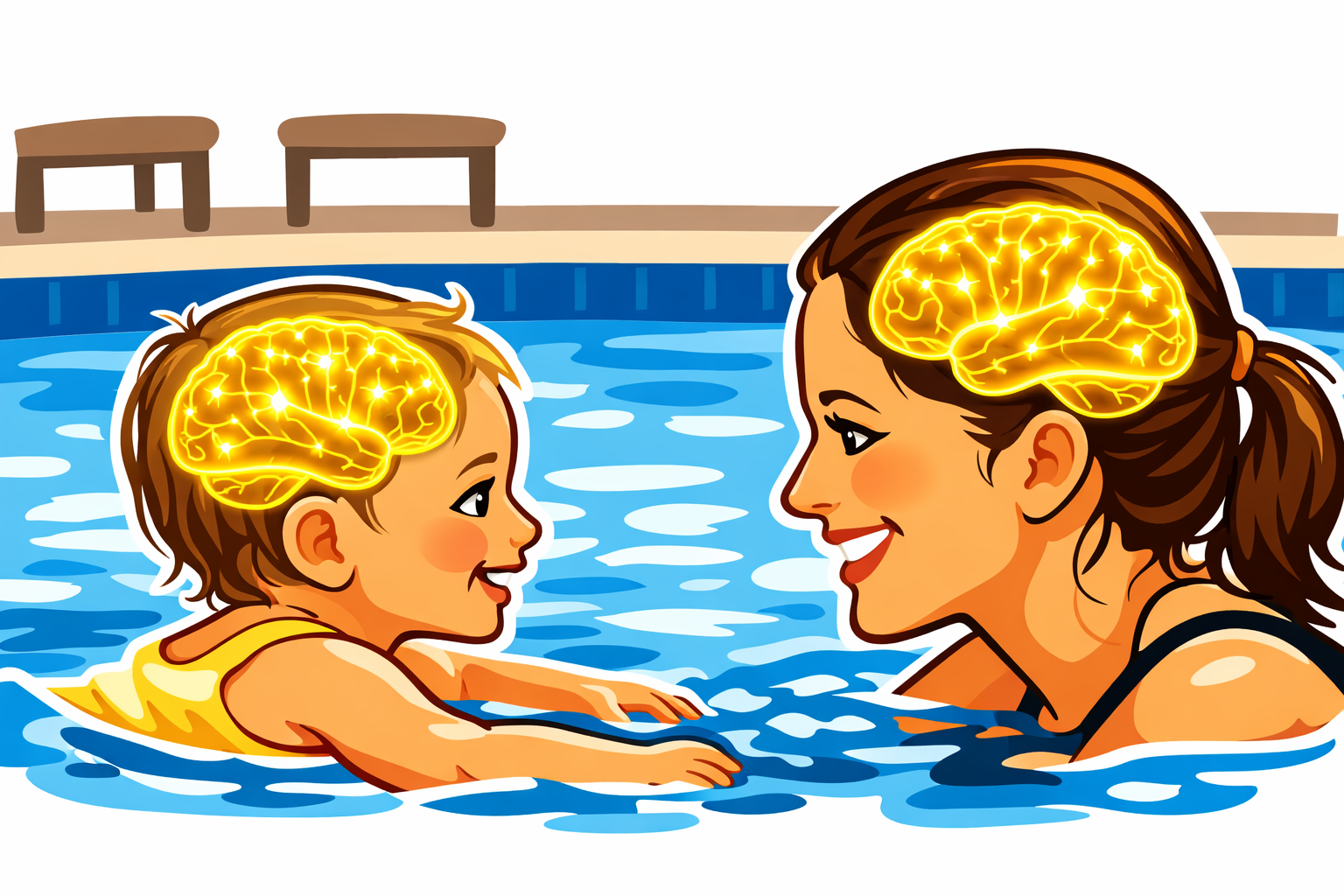
Water is a unique environment that stimulates the brain in special ways. When a child moves in water, both hemispheres of the brain must work together simultaneously. This coordination helps integrate thinking and feeling, strengthening the brain’s ability to process complex information.
Swimming movements also require the body to cross the midline, for example, the right arm working with the left leg. These cross-body movements encourage the creation of new neural pathways. Such connections support important skills like reading, writing, coordination, and emotional regulation.
Research from Griffith University, based on studies of more than 7,000 children, found that children who begin swimming before the age of five show significantly advanced development in language, motor skills, and even mathematical thinking. In some cases, they were up to 11 months ahead of their peers.
But the benefits are not only cognitive. Swimming also helps children build emotional resilience. Being in the water teaches them how to face uncertainty, tolerate discomfort, and manage fear in a supportive environment. Children who swim regularly often show lower stress levels and greater tolerance for frustration.
Of course, safety remains a crucial reason to start early. Drowning is the leading cause of accidental death for children aged one to four. Studies show that learning to swim before the age of four can reduce the risk of drowning by up to 88%.
Early childhood is often called a “golden period” for brain development. Before the age of four, the brain is highly plastic, meaning it forms neural connections more quickly than at almost any other time in life. Positive experiences with water during this stage can shape both physical abilities and emotional confidence.
Swimming lessons, therefore, are not just an extra activity. They are a valuable investment in a child’s development supporting growth in the brain, emotions, and body, both in and out of the water.